
Executive Summary
Tiny wood squares form the word “DATA,” showing pieces fitting together like clean information. Not every company handles facts well, yet order starts when rules are set on purpose. An evaluation of data oversight acts like a checkup, spotting weak spots in methods, systems, or plans already in place. This post breaks down the reason such reviews count, what parts they examine, then walks through each stage as it happens. (Picture thought: hand-carved letters lined up; tags: managing data, review, inspection.)
Introduction
Truth is, lots of firms say they run on data. Yet behind the scenes, things might look messy. Ownership of information? Not always clear. Control over it? Even murkier. Mistakes slip in when nobody checks. Misuse happens without oversight. That’s where a Data Governance Assessment steps in – quietly, effectively. It cuts through confusion by mapping who does what with your data. Clarity comes not from slogans, but structure. Picture this: stepping back to see how your team actually handles data today. That moment reveals weak spots, yes. Yet also where things could work better. Think of it as mapping the present before building what comes next. Stronger habits start here, rooted in real practice instead of guesses. When choices reflect company aims, progress follows without force.

Understanding Data Governance Evaluation
Simply put, a data governance check looks at how your company handles its information. Think of it like a careful inspection – facts are collected, current practices noted. Experts say such a review blends features of an audit with thorough records and feedback from key people involved. What makes it worth doing? It shows how developed your approach really is. For instance, are rules clearly written down, responsibilities assigned – like stewards or owners – and ways to keep data accurate already part of daily work? One way to check things? Line up how you work now with proven methods or a step-by-step framework – spot what’s strong, where gaps hide. Think of it like holding your data habits under a clear light – is everything handled on purpose, or piling up in random files no one controls.

Why It Matters
Most people think data rules are just forms to file. Bad setup, though, can damage operations fast. One review might show where errors creep in, so fixes happen early – keeping things running smooth. Spotting weak spots now prevents disasters down the road. Say personal info lacks protection; catching it early lets changes go live before anything leaks. Problems handled today mean fewer fires tomorrow. Out in finance or healthcare, messy records might bring penalties – sometimes big ones. Picture someone staring at graphs under fluorescent light, spotting gaps before they grow. Slippery numbers lead to shaky choices, maybe even dollar losses piling up unseen. Start by mapping what’s there now, like taking stock of tools before fixing a machine. A clear look today shapes smarter steps tomorrow, steering around trouble spots. Hidden value lives in order, not chaos, if you know where to pull. Decisions gain strength when backed by clean, traceable details instead of guesses. That screen glow? It could mean control returning, one solid fact at a time
Key Components and Checklist
Besides structure, who actually handles data matters? Picture teams with clear duties – do those folks understand what they’re meant to do. Maybe a council steps in now and then to shape how things run. Shifting to guidelines, some paths must be set for keeping information accurate. Security boundaries matter too. How freely can people access or move details – it depends on written limits. Got a company-wide list of your data or clear descriptions for it? IBM says rules around data spell out who owns what, who does what, among other things. How do you check if data stays accurate, also keep those checks going? Think audits, watch systems – like tracing where data comes from, managing labels, making sure rules are followed. Tools play a part – newer ones tag metadata automatically, track origins, set access by job role, guard sensitive information.
A quick look at real-world steps shows what happens next. One task follows another – reviewing current rules, talking to people involved, checking how data is handled. Someone might rate things using a standard scale, spot missing pieces afterward. Take Pricefx. They suggest writing down what works, what does not, building a step-by-step upgrade path with clear dates. Sticking to such a list helps skip nothing big
Common Methods and Tools
Some known methods help shape how evaluations unfold. Maturity models – frameworks showing steps in governance growth – are common picks among groups. Take DCAM, put forward by the EDM Council: it breaks data capability into eight areas, ranging from strategy setup to handling quality and safeguards. Five tiers mark progress within this model. Its depth stands out, backed widely across fields where rules tighten oversight. Other go-to structures show up too, like DAMA DMBOK – a field reference for managing information – with reach that spans many functions. Then there is COBIT, built around steering tech operations and guardrails; stronger when demands lean toward meeting standards and reducing exposure. Each brings something distinct, shaped by design and intent. Most platforms today come with testing functions baked right in. Take enterprise data governance systems – names like Collibra, Atla, or IBM InfoSphere – they usually pack ready-made checkups or visual reports. Automation handles chores such as organizing data assets and checking quality patterns, freeing up staff to think ahead instead of chasing details. According to IBM, strong toolsets support actions including spotting data automatically, labeling it correctly, storing background info neatly, along with applying rules consistently

Step-by-Step Assessment Process
Here’s a simplified 6-step timeline for conducting a data governance assessment:
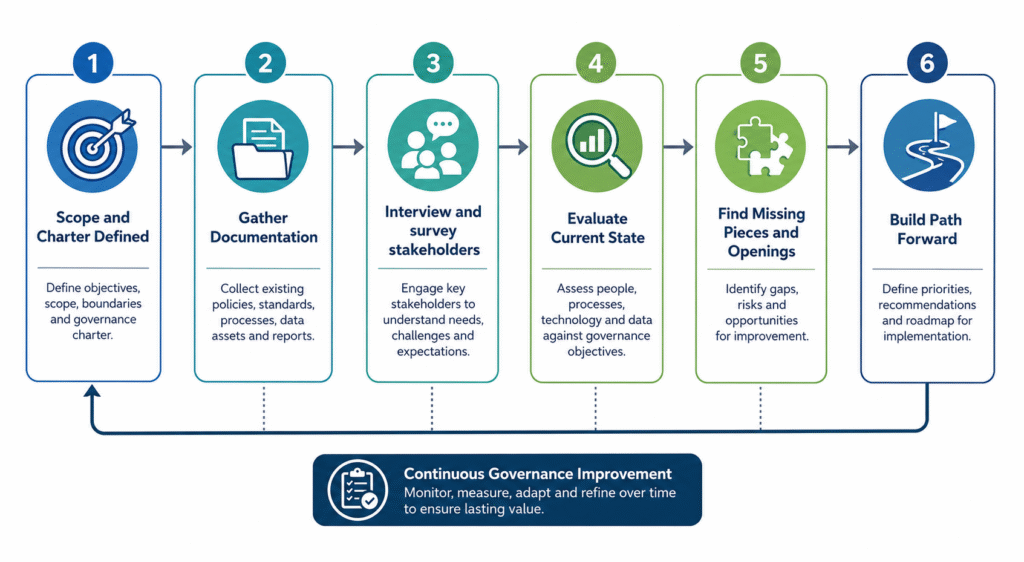
One after another, steps stick close to common industry methods. Starting off, bring together a review group – figure out goals, like which parts need checking, then pull in current guidelines, company structure details, and records of data. Moving on, collect written materials such as data rules, safety protocols, earlier checkup findings. As the Pricefix material points out, going through already available documents helps measure how clear, full, and matched up they are with typical professional standards.
Start by speaking with people who handle data – owners, stewards, tech teams, and decision makers – to learn what they actually need and where things break down. Instead of just guessing, run surveys or group sessions to get clear signals on how prepared everyone really is. Jump into assessing today’s setup by applying a structured checklist or scale across key parts like responsibilities, workflows, systems. Rate each piece honestly so gaps show up fast – like whether rules are random or already written down and followed. That snapshot tells exactly where effort must go next. 3. Start by reviewing what you found. Look closely at weak spots that could cause trouble later. Fixing small issues fast makes room for bigger changes. A clear list of data helps everyone stay on track. Stronger permissions keep information safer. Some steps matter more than others – focus there first.
Start by gathering what works well, where things fall short, then outline steps to improve. Share that summary with decision makers alongside a timeline broken into stages. When people see progress laid out clearly, they’re more likely to support it. Each phase assigns who does what, so nothing slips through cracks.

Findings and How They Were Fixed
Most evaluations turn up holes – say, no clear person responsible for data oversight, mixed-up meanings across teams, weak tracking of accuracy, or absent safeguards for private details. Picture finding quality checks trapped inside spreadsheets instead of live software tools. It happens regularly: one team holds tight to key information while nobody else gets a say in how it’s managed.
Start by fixing what’s broken. Where oversight slips, name who owns the data then teach them their role. Out-of-date rules? Rewrite those, share widely. Missing tech support? Bring in a catalog or system that checks data health. A fresh look at how Pricefx works shows it likes to shape discoveries into what they call an improvement plan – every problem gets matched with a fix, someone to lead it, one clear deadline. Progress isn’t left to guesswork either, since tracking things like accuracy scores or rule-following numbers keeps effort visible. Picture people gathered around screens full of graphs, pointing, talking through results – the kind of scene where decisions form slowly, together. Words that fit here? Looking closely at facts, working as a group, checking if rules still make sense
Final Thoughts and Next Steps
A fresh look at how data moves through your organization can shift things from chaos to control. Instead of guessing where numbers come from, you see the full picture clearly. This process lines up daily habits with bigger targets while spotting weak points early. When gaps show up now, they won’t blow up later. Skipping regular check-ins leaves room for errors to grow unnoticed. An outside perspective might reveal what internal views miss. Clarity often arrives when someone new asks different questions. Progress isn’t about doing more – it’s about focusing on what matters most. Stronger decisions follow once information flows reliably. The moment to act isn’t ahead – it’s already here
One way to look at data work is through the EDM Council’s DCAM. Its reach includes eight parts of enterprise data handling. Well known across sectors, it puts weight on structure, oversight, quality, design, and exposure control. Big firms under close watch often lean on it when they need depth in growth tracking. Another path comes from DAMA’s DMBOK. It spans eleven zones tied to managing information. Instead of pushing tools or brands, it gives balanced insight into planning, consistency, records about data, and more. Groups that want clear direction without bias find value here. Then there is COBIT, updated in 2019, built around IT leadership with attention to data rules. What stands out is how well it lines up with audits, legal demands, and guarding systems. Organizations in fields like banking or medical services turn to it where laws shape daily choices.
Start with the EDM Council’s DCAM if you want structure. Move to IBM’s material when real-world examples matter more than theory. Flip through DAMA International’s DMBOK when gaps appear in understanding. Try the Data Governance Institute’s model when clarity feels out of reach. Pull insights from Pricefx’s approach even though it comes from a vendor. Find value across them all without relying on any single one.